Bad at texting back? A guilt-free plan for paying off your reply debt
Bad at texting back? Why replies pile up, whether it’s rude to leave it for days and a guilt-free system that stops friends feeling ignored.
The short of it
- Being bad at texting back is usually about putting off a reply that feels big, not about how much you care.
- Chatty texts and memes can wait a little, but questions, plans and news deserve a same-day answer or at least a short placeholder.
- A short reply is kinder than silence, because silence leaves people guessing and some of them will guess it’s about them.
- A weekly reply amnesty clears the backlog, and a separate rhythm for reaching out stops quieter friends slipping through the gaps.
If you’re bad at texting back, you’re not a bad friend. Replies usually pile up because a message feels like it needs a proper answer, so you wait for a better moment, and the longer it waits, the bigger the reply feels. The fix is a system, not willpower: short replies now and a weekly amnesty for the rest.
Your friend asked if you’re free Saturday. It is now a different Saturday.
If reply debt came with a monthly statement, it would read something like this:
- Balance owing: 14 replies.
- Oldest item: Anika, 23 March, re “free Saturday?”
- Interest: compounding awkwardness.
- Minimum repayment: one sentence, sent today.
Below: why it happens, when slow replies bother people and a tickable weekly amnesty checklist that clears the backlog in one sitting. Replying is only half of staying in touch with friends, so the end covers the other half.
Why am I so bad at texting back?
Usually because replying has quietly turned into a task. A message that deserves a thoughtful answer gets saved for later, and later never seems to have a gap in it. Meanwhile the reply grows until it seems to need the paperwork of a loan application.
A review by Fuschia Sirois and Timothy Pychyl argues that putting things off “has a great deal to do with short-term mood repair and emotion regulation”: you dodge the task to dodge the feeling. It’s about procrastination in general rather than texting, but the fit is hard to miss.
Perfectionism may play a part too, though not the colour-coded spice-rack kind. A meta-analysis led by Sirois linked procrastination in general to “perfectionistic concerns”, the worry about being judged, rather than to high standards. Holding out for the reply they deserve may be that worry talking.
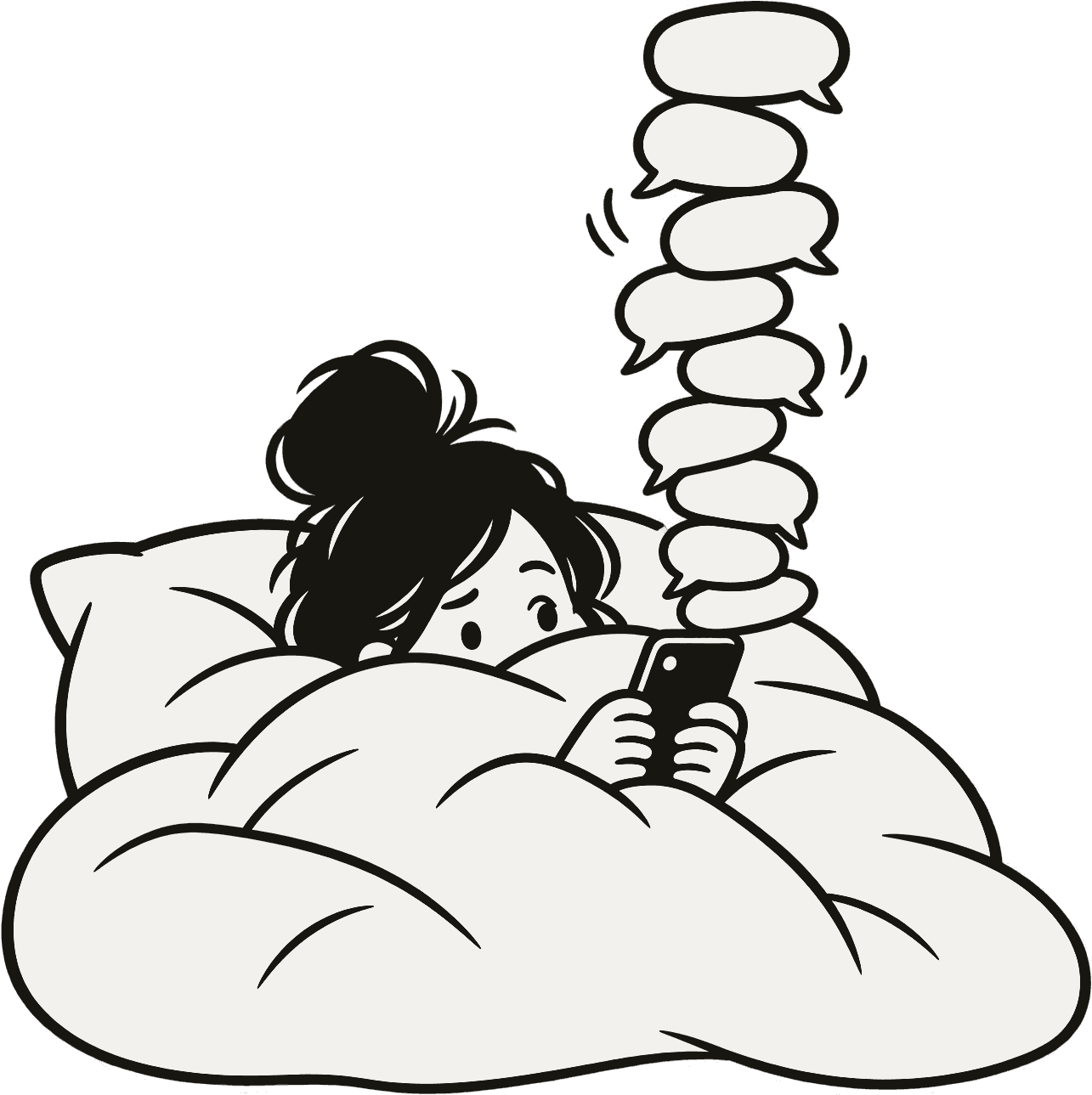
Then there’s the classic. You read the message, composed a lovely reply in the shower and spent a week believing it had been sent. Replies written in your head are beautifully worded and have a delivery rate of zero.
None of this means you don’t care. In a 2026 study of ghosting, people who had gone quiet on someone felt worse about it than the other person imagined, especially when the silence wasn’t deliberate. The participants were Americans thinking about people they didn’t know well, but the guilt may sound familiar.
If the real worry is whether you’re a bad friend, our am I a bad friend quiz is kinder than your unread count.
Bad at texting but good in person
That combination makes sense. Texting is the most common way friends stay in contact: in a Pew Research Center survey of US adults, 61% of those with close friends said they text one at least a few times a week, while 29% see one in person that often.
But text is a narrow pipe. In a small 2013 study of 58 young women who were close friends, bonding was greatest in person and weakest over instant messaging, with video and audio chat in between. If you’re a two-hour-lunch person trapped in a two-line medium, suggest a call or a walk whenever a thread starts needing paragraphs.
If it might be ADHD
If forgetting to reply is part of a wider pattern, with appointments and forms slipping the same way, ADHD is sometimes part of the picture. Our guide to ADHD object permanence and friendships covers what might be going on and what helps, though only a proper assessment with a qualified health professional can tell you whether it applies to you.
When it’s more than texting
One more thing, said plainly. If you’re avoiding everyone’s messages, not just the group chat, and it comes with feeling flat or overwhelmed, that’s worth a chat with your GP or a psychologist. On Beyond Blue’s list of the signs of depression is “withdrawing from close family and friends”, and it suggests a GP “can be a good place to start the conversation about your mental health”.
Is it rude to not text back for days?
It depends on what they sent. A meme or a chatty “how’s things?” can usually wait a little, though a day beats a week. It stings sooner when the message is urgent, when someone’s waiting on your answer to make a plan or when you’d been replying quickly and suddenly stop.
Two of those have research behind them. In a 2025 study in Computers in Human Behavior, people read mocked-up chats and said when they’d start to feel ignored, and “both message urgency and chat partner’s prior responsiveness, but not closeness, predict shorter delay tolerance”.
In other words, being friends since primary school buys you no extra time. One of the study’s chats has you asking a sibling at 3.57pm which app the 4pm family video call is on. With three minutes to go, nobody wants a thoughtful reply, just a link.
It was a study of imagined chats, so take it with a pinch of salt.
How long is too long to not text a friend back?
No study gives a safe number of days, so here’s our rough guide:
- A question with a date in it. Same day, even if it’s “not sure yet, I’ll know by Thursday”.
- Logistics. Straight away. “Which gate?” expires when the gate closes.
- News, good or bad. Within a day. “That’s huge, tell me everything on the weekend” counts.
- A chatty update. A day or two, or longer with a placeholder.
- A meme. Technically never, though a heart is always welcome.
Already past that? Our guide on how to apologise for not texting back has the words, sorted by how late you are.
Is it OK to not reply to a text?
Yes, for some texts. A meme, a “haha”, a thumbs-up, a goodnight or the natural end of a conversation doesn’t need anything back. Direct questions, plans and news someone has shared with you always deserve a reply, even a short one.
Short replies matter because silence gets filled in. In the same ghosting research, people imagining a quiet friend they didn’t know well split their guesses almost evenly: 34% said no bandwidth, 34% a dull conversation and 32% that they were annoying their friend. After a short reply, 58% assumed the friend just didn’t have the bandwidth, and only 20% still thought they were being annoying.
The short reply in that study was seven words: “Sorry, but I can’t talk right now.” As the authors put it, “even a short acknowledgement can prevent the uncertainty inherent in ghosting”. Seven words, not one of them witty, and it still did the job.
Reply debt gets paid off in sentences, not essays.
Is not replying to a text ghosting?
Not in the usual sense. Ghosting normally means going quiet with no plan to come back, while a slow reply is just late. From the waiting side, though, the two look identical for a while: one message and a lot of nothing underneath it.
As the 2025 study of imagined chats puts it, “ghosting begins not with someone leaving but with someone waiting for a response”.
Is it better to leave a message on read or unread?
Neither is rude by itself, but read receipts change what the other person sees, and for a four-letter word, “Read” does a lot of talking. With them on, Apple says the sender sees “Read” under their message, or “Delivered” if you haven’t opened it. To turn them off:
- For everyone. Open Settings, tap Apps, tap Messages and turn off Send Read Receipts.
- For one person. In Messages, open the conversation, tap the contact icon at the top and turn off Send Read Receipts.
If you’ve opened something you can’t answer yet, keep it in sight. Apple built a feature for exactly this: “When you don’t have time to respond, you can mark conversations as unread so you can return to them later.” Swipe right on the conversation, the phone version of leaving the library book by the front door.
There’s also a Read All button (tap Edit, then Select Messages). It clears the badge, not the debt.
How to get better at texting back: the weekly reply amnesty
To get better at texting back, stop relying on willpower and book a weekly reply amnesty: twenty minutes, same time each week, clearing the backlog in a set order.
It works because it takes the decision out of each message: no waiting for the perfect moment, just Sunday night, your phone and a cup of something. Tick through it in this order:
The amnesty, in order
Nothing you tick leaves this page.
How to read your score
- 0 to 2your scoreIn arrears. No judgement: start with the oldest question and send one placeholder.
- 3 to 5On a payment plan. The balance is coming down: send a placeholder for whatever’s left and call it a night.
- 6+Account in good standing. Enjoy the quiet, and see you next week.
Placeholders aren’t a dodge. They’re the short reply the ghosting research found helps, with a due date attached, so keep the promise.
- Saw this and I want to reply properly. Sunday, when I have two free hands and a working brain.
- Yes to Saturday in principle. I’ll confirm a time tonight once I’ve checked the footy draw.
- This deserves more than a thumbs-up and less than an essay. Can I call you on the weekend?
How to tell your friends you’re bad at texting
Tell them once, lightly and early, then give them a way to reach you when it matters. It turns your slow replies from a mystery into a known quirk, like the mate who’s never on time but always turns up with a bag of mandarins.
- Fair warning: I’m a much better friend than texter. If I go quiet, I haven’t gone off you. I’ve read it, loved it and replied in my head, which is a known fault.
- I’m slow at replying at the moment and I hate that it might look like I don’t care. I do, and I’ll always get back to you.
- If it’s ever urgent, call me twice in a row. A second call gets through even when I’m on Do Not Disturb, and I’ll pick up.
How to get better at texting friends: text first
Replying and reaching out are different jobs, and your inbox only does one of them. Left to itself, it hands your attention to whoever texts most, which is how a book club chat that hasn’t mentioned a book since the second meeting ends up hearing more from you than your oldest friend. The friends who don’t text first get nothing, because there’s nothing to reply to.
So give reaching out its own system. Pick the handful of people you’d hate to drift from, the ones you’d ring first if you won the meat tray, and decide roughly how often you’d like to hear from each (here’s how often to talk to your friends, as a rule of thumb). Then start conversations when you have time, instead of owing replies when you don’t.
That’s the half Howdy Mate! was built for. It never reads your messages, so the unread count is all yours. What it does do is give each mate a rhythm, and the Today screen shows who’s due for a hello, including the quiet ones who never text first. For a wider look, here’s our honest comparison of the best apps to keep in touch with friends, ours included.
Bad at texting back? The short version
- It isn’t about caring. Slow replies are mostly about dodging a reply that feels big.
- Chat can wait a little. Questions with dates, plans and news get a same-day answer or a placeholder.
- Say something short. A seven-word reply makes people less likely to assume it’s about them.
- Run a weekly amnesty. Quick replies, the oldest question, placeholders, then the 80% version.
- Tell your friends once. Then give them a way to reach you when it’s urgent.
- Reach out on a rhythm. Your inbox only looks after the friends who text first.
Now open your messages and find the oldest question in there. That Saturday has been and gone, but there’s another one this week, and nobody has booked it yet.
Questions people ask
Why am I so bad at texting back?
Usually because replies feel like tasks that deserve a proper answer, so they get saved for later and feel heavier the longer they wait. Research on procrastination in general links putting things off to dodging an uncomfortable feeling in the moment, and a 2026 study found people who go quiet feel worse about it than the other person imagines.
Is it rude to not text back for days?
It depends on what they sent. A meme or a chatty update can usually wait a little, but urgent messages, plans and news need a quicker answer. In a 2025 study of imagined chats, people said they’d feel ignored sooner when a message was urgent, and being close to the person made no difference.
How do I tell my friends I’m bad at texting?
Tell them once, lightly and early, that slow replies aren’t about them, and give them a way to reach you when something is urgent, such as calling twice. On iPhone, a Focus can be set to let repeated calls from the same person through.
Why am I bad at texting but good in person?
Because text carries far less than a face-to-face conversation. In a small 2013 study of close friends, pairs bonded most in person and least over instant messaging, so it makes sense if you feel closer to friends over coffee than over text.
Is it OK to leave a text on read?
For a meme or a conversation that has wound down, yes. For a question, a plan or news, send at least a short reply, because silence leaves people guessing. On iPhone you can also turn off read receipts for everyone or for one person.
Is not replying to a text ghosting?
Not in the usual sense. Ghosting generally means going quiet with no explanation and no plan to come back, while a slow reply is just late. One 2026 study counts any unexplained silence that leaves someone wondering whether a reply will ever come, though, which is why a quick “saw this, proper reply soon” helps.
Want a hand remembering? Howdy Mate! is free on the App Store.
Sources
- When does waiting for a reply turn into ghosting? Individual, relational, and situational predictors of feeling ignored in online messaging. Computers in Human Behavior, 2025.
- When does waiting for a reply turn into ghosting? Study materials and data. Open Science Framework, 2025.
- The pain of ghosting? People underestimate how bad their conversation partners feel about not responding (accepted manuscript). Personality and Social Psychology Bulletin, via the University of Cambridge Apollo repository, 2026.
- Procrastination and the priority of short-term mood regulation: consequences for future self. Social and Personality Psychology Compass, 2013.
- A meta-analytic and conceptual update on the associations between procrastination and multidimensional perfectionism. European Journal of Personality, 2017.
- Where men and women turn for emotional support and social connection. Pew Research Center, 2025.
- The effects of text, audio, video, and in-person communication on bonding between friends. Cyberpsychology: Journal of Psychosocial Research on Cyberspace, 2013.
- Signs and symptoms of depression. Beyond Blue.
- Turn read receipts on or off in Messages on iPhone. Apple Support.
- Keep track of messages on iPhone. Apple Support.
- Episode #79: David Allen with a two-minute tip: the two-minute rule. Getting Things Done, 2020.
- Allow or silence notifications for a Focus on iPhone. Apple Support.

Written by Sammy Sergi, who makes Howdy Mate!, a free iPhone app for keeping in touch with the people who matter. Every guide is checked against the research it cites.