Friend keeps cancelling plans? What it means, what to say and how to cancel nicely
Friend keeps cancelling plans last minute? What it means, what the research says, replies to copy, when to stop asking and how to cancel politely yourself.
The short of it
- Most people say one cancellation wouldn’t hurt a friendship: in a 2023 survey of 1,192 people, the typical answer to how much it would affect the friendship was “not at all”.
- How people cancel may matter more than whether: very late notice, better offers and made-up excuses sting, and 83% said a fake excuse would offend them at least moderately.
- When a friend keeps cancelling, shrink the next plan and say something kind once, before deciding whether to stop organising.
- If you need to cancel, do it early with a quick call or text, the real reason and a specific new date.
If a friend keeps cancelling plans, judge the pattern, not the single cancellation: one cancelled plan is usually just life, but repeated last-minute cancellations with no new date offered deserve one kind, honest conversation. If you’re the one cancelling, give notice, give the real reason and always offer a new date.
You know the text. It lands at 4.47pm, it opens with “hey sooo…” and by the second “o” you’re either a little crushed or already reaching for the toastie maker. Often both.
Below: why friends cancel, what stings, replies to copy, an audit for spotting a pattern and a builder for an honest cancellation text. (Worried you’re the one who keeps cancelling? Our am I a bad friend quiz is kind about it.)
Why does my friend keep cancelling plans?
Often for ordinary reasons that have little to do with you. It can mean you’ve slipped down their list, but rule out the innocent explanations first.
- They said yes to a week that doesn’t exist. In a 2005 set of experiments on how we judge our spare time, researchers found that “people expect slack for time to be greater in the future than in the present”. The two authors confess to it themselves: “Yes” was often followed eventually by “Damn!”
- They’re worn out. Living out in the world, or getting ready to, “is exhausting, but staying home provides comfort”, Michigan State psychologist William Chopik told his university’s news service. Its story opens with someone who wants to “go home, change into sweats”, or in Australian, trackies and a toastie.
- They find it hard to say no. As research on turning down invitations puts it, “saying no can be hard”, so people sometimes accept invitations they’d rather not, and it found they “overestimate the negative ramifications” of declining. The no still arrives, just later and by text.
- They’re going through something. Depression, anxiety, a chronic illness or a hard stretch at home can turn “yes” into “not tonight” (more below).
- They’re cancelling for a better offer, or a new partner. A better offer is the bad excuse people in a 2023 survey named most often (more below), and a new relationship can eat a calendar whole for a while.
One cancellation tells you little, so watch the pattern. Our rule of thumb (not a study’s): once is life, twice is a pattern, three times is a conversation.
If they cancel and never suggest plans either, that’s a different question: see our guide to one-sided friendship. And if the friendship runs on one big dinner a quarter, every cancellation cancels a season; a little contact in between (see how to stay in touch with friends) takes the pressure off.
Is it rude to cancel plans last minute? What the research says
It can be, mostly because of the timing. But most people don’t take a cancellation too hard, and how you cancel may matter more than whether you do. That’s the gist of a 2023 study of 1,192 people by researchers at Michigan State and Syracuse universities, mostly students answering questions about a friend cancelling on them.
The paper’s first line is “Being cancelled on is inevitable.” It may be the most comforting opening sentence in psychology.
- Most say one cancellation won’t dent a friendship. Asked how much it would affect the friendship, the typical answer was “not at all”, and 88% said “not at all” or “a little”.
- People want notice and a quick message. Unprompted, 59% mentioned advance notice and 48% a simple call or text.
- Last minute is the annoying part. For plans a week away, the most annoying time to be told was, typically, “a few minutes before”.
- Health, family and work are fine. About half named health (49%) or family (49%) as reasonable excuses, and 42% named work.
- Hardly anyone asks for a grovel. Only about one in ten mentioned wanting an apology, though 66% called rescheduling at least moderately important when asked.
- Best friends sting more. If a best friend cancelled, 60% would be at least moderately upset, against 17% for a casual acquaintance. That’s the small print on being someone’s favourite person.
53%
“I had to wash my hair” was the paper’s example of an excuse “so bad that it is worthy of ridicule”. Hair, officially, is not a reason.
Then there’s lying: 83% said they’d be at least moderately offended to find out a friend’s excuse was made up. The lie stings more than the cancellation. As the researchers put it, “how cancellations are made may be more important than whether cancellations are made.”
A cold is forgivable. A cold that later turns up, nicely tanned, in someone’s beach photos is a different conversation.
A cancelled plan is not a cancelled friendship.
One caveat: the questions were hypothetical, the sample was young and it didn’t look at the friend who cancels again and again (the authors flag it: “do they often cancel?”). So the advice on patterns below is ours: sensible, we hope, and about as peer-reviewed as a restaurant tip from the group chat.
How to respond when a friend cancels last minute
Keep it short, warm and forward-looking: say it’s fine, wish them well if they’re sick and suggest a new date, or hand them the job of picking one. You don’t need details. You’re their friend, not their HR department.
Skip the lone thumbs-up. You mean “all good”, but after a cancellation it tends to land as “noted”.
- Oh no, go back to bed. Soup is the only plan tonight. I’m free Thursday if you’re upright by then.
- All good, these things happen. Saturday morning instead? I’ll come to your end.
- No stress at all. You pick the next night and I’ll be there, even if it means missing the footy.
- Honestly, I was really looking forward to this one, so let’s lock another in now. Next Friday?
If it’s the second or third time, keep the same shape but hand them the rebook: “you pick” is friendly, and a gentle test of whether they mean it.
If you’re disappointed, say so, once, as in the last example. Honest and kind will get you further than breezy and quietly fuming.
When to stop making plans with a flaky friend
Not after one cancellation, or even two. Once there’s a pattern, change the plan, then say something once, kindly; step back only if nothing changes, and even then, leave the door open.
Rain checks are a currency with an inflation problem: the first buys a whole dinner, and by the fourth it barely covers a “we must do this again sometime”. Even Woolworths puts a 30-day expiry on its raincheck vouchers. A friend’s rain check never expires, which is how you end up holding four of them from last summer.
Not sure it’s a pattern yet? Tick whatever’s true of your last few plans, and count the cancellations, not the grudges.
The cancelled-plans audit
Nothing you tick leaves this page.
How to read your score
- 0 to 1your scoreProbably just life so far. Rebook, enjoy the free evening and see how the next plan goes.
- 2 to 3A pattern, possibly just an over-committed friend. Shrink the next plan and hand them the pen: “Want to pick a morning next week? I’ll come to you.”
- 4+Time for one kind conversation. They may be going through something, or you may have slipped down their list, and only asking tells you which: “Our last few plans have fallen over and I miss you. Is everything OK?”
Shrink the plan
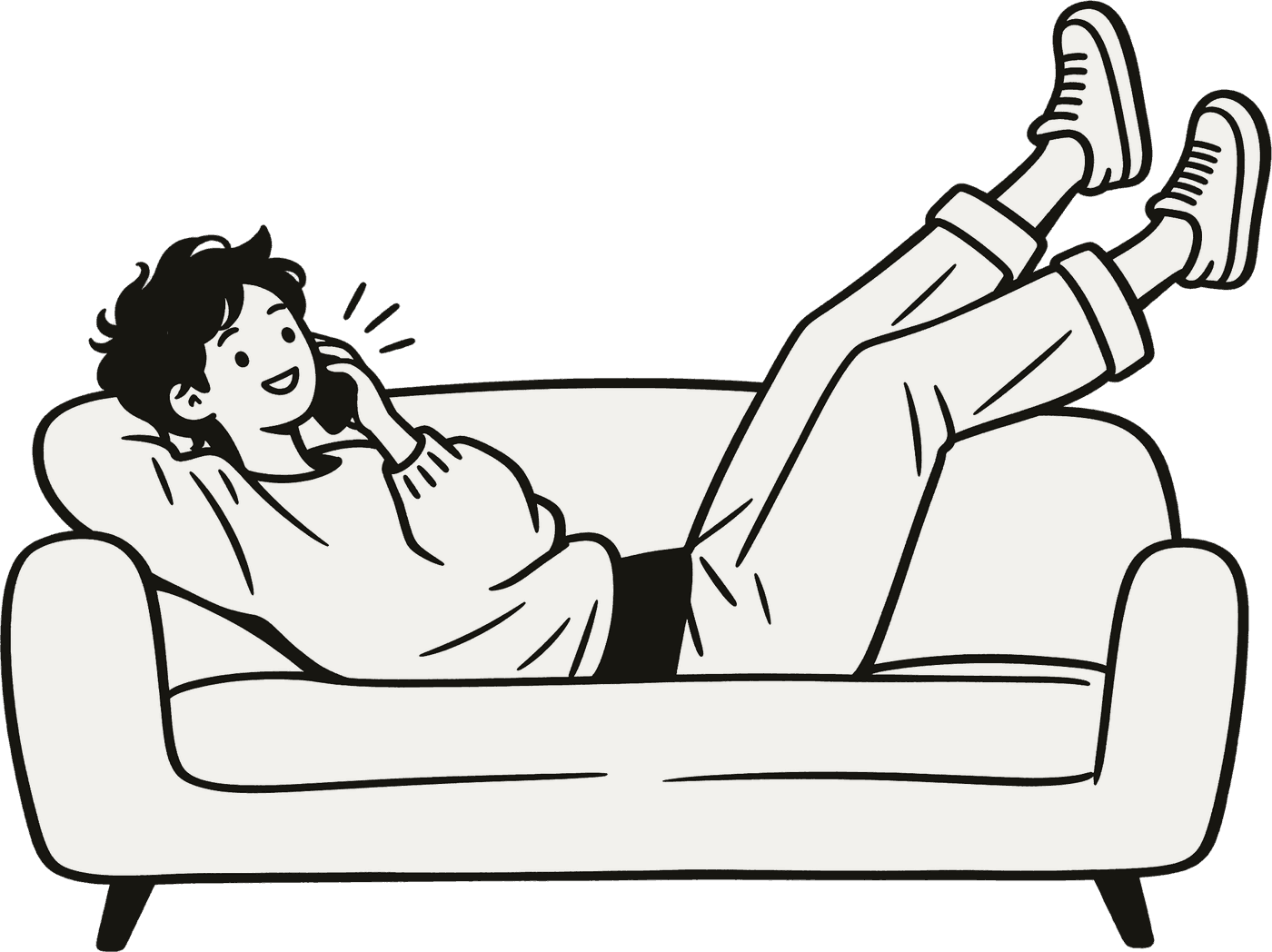
The quickest fix for serial cancelling is a smaller, more specific plan (our guide on how to ask a friend to hang out has the wording). A Saturday dinner across town is easy to cancel; a weekday walk near their place is surprisingly hard to wriggle out of, and even a phone call is a catch-up.
Say it once
If the smaller plan falls over too, say something, once and kindly, making it about missing them rather than the tally: “Our last few plans have fallen over and I miss you. Is it a busy stretch, or is something going on?”
It’s usually less awkward than you fear. In experiments on honest conversations, people “overestimate how negatively others will react to their honesty”.
Step back without shutting the door
If nothing changes, stop organising, not caring. Tell them the door’s open (“I’d love to catch up whenever suits, you pick”) and settle into a lighter rhythm; here’s how often to talk to friends at each level of closeness.
And memory is no help: ask it when you last saw someone and it says “a while”, then “Easter?”, then “which Easter, though?”
When a friend keeps cancelling because of depression, anxiety or a hard time
If a friend keeps cancelling because they’re depressed, anxious or going through something, keep inviting and make each plan smaller, closer and easy to say no to. Pulling out of plans can be a sign someone is having a hard time: among the ways depression can show up, healthdirect lists “staying in rather than going out socially” and “not returning messages or contacting people close to them”.
Social anxiety can make people “avoid or worry a lot about social activities”, and ADHD can mean, in the NHS’s words, “finding it hard to organise your time”, which can make plans harder to keep (more in ADHD object permanence and friendships).
If that might be what’s happening, drop the audit. Counting cancellations doesn’t help someone who’s struggling; staying close does.
Beyond Blue’s advice on supporting someone with anxiety or depression is that “sometimes the most important thing you can do is just be there”. In practice:
- Keep inviting. Let them decline as often as they need to, and keep asking anyway.
- Make plans smaller and closer. Bring dinner to them, or suggest a short walk near their place.
- Make “no” free. Say it’s fine to cancel, even on the day, and mean it.
- Skip the pep talk. Beyond Blue suggests avoiding lines like “Just snap out of it” or “Think more positively”.
- I’m getting Thai on Thursday. Can I drop some round? Trackies welcome, and we don’t have to talk about anything.
- I’m walking past yours on Sunday morning around ten. Come along if you feel like it, and it’s completely fine if not.
- Saw the dumplings you like on special and thought of you. The door’s open whenever you feel like company, even if that’s a while off.
If you’re worried about their safety, don’t wait for the next plan. In Australia, Lifeline is on 13 11 14 (or text 0477 13 11 14); in the US, call or text the 988 Lifeline; in the UK and Ireland, Samaritans are on 116 123. If a life is in danger, call 000 or your local emergency number.
For support that isn’t urgent, in Australia the Beyond Blue Support Service is on 1300 22 4636, for them or for you.
How to cancel plans with a friend politely
Tell them as early as you can, by a quick call or text, give the real reason in a sentence and offer a specific new date in the same message. Keep the apology short and skip the gift. The first three are what people in the survey wanted most; the new date is our rule, and the one we’ll be difficult about.
Now the new date, the bit that’s easiest to skip. “Let’s reschedule” has everything a plan needs except a day, a time and anyone doing the booking.
In a classic 1999 review of research on intentions, Peter Gollwitzer describes students asked to write about their Christmas Eve within 48 hours: three quarters of those who picked exactly when and where to do it managed it, against one third of the rest. If a time and a place can get students doing homework about Christmas Eve, it might just get two adults to a café.
The builder below has one rule baked in: no new date, no send.
Build a polite cancellation text
Pick the true one. In the survey, 83% would be offended to find an excuse was made up.
Hey, heads up while it’s still a few days off. I’ve come down with something and I’d rather not give it to you. I was really looking forward to it. Could we do Thursday instead? I’ll book, and I’m writing it in pen.
If the reason is “wiped out”, own it and make the new date firm: only 18% in the survey spontaneously named tiredness as a reasonable excuse, against about half for health or family. Without a date attached, “I’m wiped out” can sound a lot like a better offer involving the couch.
If you’re dreading hitting send, take heart: cancellers tend to overestimate the damage. In a preprint that hasn’t been peer-reviewed yet (6,824 people across online studies in the US and France), one study had 800 US adults picture a best friend’s dinner cancelled over a work emergency. Those imagining doing the cancelling guessed it would rate 4.96 out of 7 for acceptability; those imagining being cancelled on gave it 6.22.
So the friend you’re about to cancel on is probably more understanding than the version of them you’ve been arguing with in your head since lunch. And 40.9% of the cancelled-on expected a make-up gift of $0, so put the fruit basket down. (Like the survey, it only looked at one-off cancellations.)

Once it’s sent, put the date somewhere you’ll see it. In Howdy Mate! you can tap Schedule a Reminder on their page and pick the day you offered; it’s waiting on your Today screen when the day comes, which is more than most rain checks manage.
Why do I always cancel plans with friends?
Often because you said yes to a week that doesn’t exist yet (see the spare-time research above): the “yes” goes out to a Thursday six weeks away, and future-you, who was supposed to be less busy, turns up exactly as busy as ever.
Long-range forecast for a Thursday six weeks away: clear skies, empty diary. Accuracy: historically poor.
So before you say yes, look at that week as if it were this week, and when you mean no, say it at the start. Declining up front costs less than you think (see the invitation research above), and far less than a 4.47pm “hey sooo…”.
Worried this makes you a bad friend? It probably doesn’t, and if it’s nagging at you, the am I a bad friend quiz will tell you kindly and honestly.
The short version
- One cancellation is life. Most people say it wouldn’t affect the friendship at all.
- How you cancel counts. Early notice and an honest reason go down fine; lies and better offers sting.
- Reply warmly and look ahead. Offer a new date, or let them pick one.
- Watch the pattern. Shrink the plan, say something kind once, then step back without shutting the door.
- If they’re struggling, keep inviting. Small, close plans, and “no” is always fine.
- If you’re cancelling, do it early. Real reason, short apology, new date.
Then go and make that toastie, and send the new date while the cheese melts. Good friendships aren’t the ones where nobody cancels. They’re the ones where somebody always rebooks.
Questions people ask
What do you do when a friend keeps cancelling plans?
Look at the pattern rather than any single cancellation. After two or three, suggest a smaller plan near them, then say once, kindly, that you miss them and ask if everything is OK. If nothing changes, step back from organising but leave the door open.
Is it rude to cancel plans last minute?
It can be, mainly because of the timing. In a 2023 survey of 1,192 people, the most annoying time to be cancelled on was a few minutes before, and most wanted advance notice. An early, honest heads-up with a new date is usually fine.
How do you cancel plans with a friend politely?
Tell them as early as you can with a quick call or text, give the real reason in a sentence, keep the apology short and offer a specific new date in the same message. Skip made-up excuses, which sting more than the cancellation itself.
Should I stop making plans with a friend who always cancels?
Not straight away. Try a smaller plan near them and raise it once, kindly, in case something is going on. If they keep cancelling and never rebook, it’s fine to stop organising, but let them know you’d love to see them whenever suits.
How do you tell a friend they hurt you by cancelling?
Say it once, briefly and kindly, and focus on missing them rather than counting cancellations. Something like “our last few plans have fallen over and I miss you, is everything OK?” opens a conversation without blame. Research suggests honest conversations go better than people expect.
Is it OK to cancel plans because of anxiety or because you’re tired?
Sometimes, yes. Be honest about the reason, cancel as early as you can and offer a smaller plan or a firm new date. If anxiety is behind most of your cancellations, it may be worth talking to a GP or counsellor about it.
Want a hand remembering? Howdy Mate! is free on the App Store.
Sources
- How to Cancel Plans With Friends: A Mixed Methods Study of Strategy and Experience. Collabra: Psychology, 2023.
- Canceling plans with a friend? MSU research says don’t lie. MSUToday, Michigan State University, 2023.
- Resource Slack and Propensity to Discount Delayed Investments of Time Versus Money. Journal of Experimental Psychology: General, 2005.
- Saying no: The negative ramifications from invitation declines are less severe than we think. Journal of Personality and Social Psychology, 2024.
- You Can Handle the Truth: Mispredicting the Consequences of Honest Communication. Journal of Experimental Psychology: General, 2018.
- Depression. healthdirect Australia, 2025.
- Social anxiety (social phobia). NHS, 2023.
- ADHD in adults. NHS, 2025.
- How to support someone with anxiety or depression. Beyond Blue.
- Lifeline: call 13 11 14. Lifeline Australia.
- Talk to a counsellor (Beyond Blue Support Service). Beyond Blue.
- 988 Suicide & Crisis Lifeline. 988 Lifeline.
- Contact a Samaritan. Samaritans.
- People Underestimate the Acceptability of Canceling Plans with Others (preprint). PsyArXiv, 2025.
- Implementation Intentions: Strong Effects of Simple Plans. American Psychologist, 1999.
- Returns policy (Specials Raincheck vouchers). Woolworths.

Written by Sammy Sergi, who makes Howdy Mate!, a free iPhone app for keeping in touch with the people who matter. Every guide is checked against the research it cites.