Losing friends after having a baby? A guide for both sides of the pram
Losing friends after having a baby is common. Here’s why it goes quiet, what to text a new parent and how both sides of the pram can stay close.
The short of it
- Losing friends after having a baby is common: in long-term Swiss research, contact with friends dropped after a baby and, for mothers, recovered as the children grew.
- New parents often go quiet because of tiredness, money and childcare, not because they care less, and many find asking for help hard because it feels like being a burden.
- Friends can help with one specific offer (like dinner on the doorstep on Thursday), short visits and messages that keep coming after the first few weeks.
- New parents can keep friendships going by choosing three to five people, sending short texts and inviting friends along to things they’re already doing.
Losing friends after having a baby is very common. Long-term research finds contact with friends drops after a baby, when new parents are short on sleep, time and money, and for mothers it recovers as the children grow. Small, specific, low-effort contact from both sides keeps a friendship going until things settle.
Nobody has fallen out. One of you has simply started working for a 4kg dictator who communicates only by screaming and has banned sleep.
This guide covers both sides of the pram, plus a builder that turns “let me know if you need anything” into an offer a tired person can say yes to.
Is it normal to lose friends after having a baby?
Yes. A new baby is one of the big life changes that can make friendships drift apart, and it usually comes down to logistics rather than feelings.
When Dutch researchers followed more than 5,000 people in Switzerland through yearly surveys from 1999 to 2010, they found that having a child meant less contact with friends and more with neighbours, while contact with relatives stayed about the same. In the authors’ words, “especially the number of friends declines”. Relatives, it seems, are much harder to shake off (several of them have a key).
The drop was bigger for people who became parents earlier than their peers. For mothers it was deepest while the children were under five and eased as they grew, but fathers’ contact with friends stayed lower, even once the child turned 19. (It’s older Swiss data, mostly from before smartphones, so hold the details lightly.)
Contact with neighbours peaked when the child was roughly 5 to 12, an age when, as the researchers put it, a child “probably plays in the neighbourhood”. So a parent’s social life can end up being chosen by the local sandpit.
In a one-off Oxford online survey of 540 people, under-36s with children named fewer people they could turn to in a crisis. Citing earlier studies, the authors add that baboon mothers stretched by their infants’ feeding demands “progressively drop casual friendships in order to preserve relationships with their female kin”.
Your friend isn’t being rude. She’s being a very tired primate.
Over 80%
Ask why, and the answers are mostly practical. In that 2018 survey of UK mums under 30, the reasons for not going out more were lack of money (60%), feeling tired (55%), wanting to stay with their children (47%) and the hassle of organising childcare (38%).
None of the reasons in the release is “went off my friends”. The friendship just needs different fuel for a while.
My friend had a baby and now I never see her
It’s very unlikely to be about you. Your friend is living on broken sleep in a house that runs on feeds, and anything that needs planning, travel or a babysitter is the first thing to go.
Newborns need about 14 to 17 hours of sleep every 24 hours, yet in the first three months a baby may wake “every 1 to 3 hours”. So the baby sleeps most of the day and nobody else in the house sleeps at all, which is the least fair maths in nature.

They may also find it hard to ask. In a small US study of 33 new mothers, practical help with meals, cleaning and getting some sleep was “essential” to their recovery, and many felt help from partners and family “should be provided without asking”. Fear of being judged and “feeling like a burden” held many back from asking, friends included.
One mum in the study put it this way: “getting out of bed is a big victory, and then getting to take a shower is a big victory.” The group chat comes somewhere after both. It may be on silent anyway: Australia’s Raising Children Network suggests new mums “use voicemail and switch your mobile phone to silent”, so your text is being screened on government-backed advice.
What many new parents would love friends to know
- They still want to hear from you. A quiet parent isn’t asking for quiet back: another mum in that US study “really wanted to talk to people” and “didn’t know who to call”. Right now, a thumbs-up sent at 3am is a long and heartfelt letter.
- Your news is welcome. A story about your week is a break from the feeding schedule, not an intrusion.
- There’s a new birthday to remember. Pop the baby’s date in wherever you keep friends’ birthdays (our guide on how to remember friends’ birthdays has a system).
- “We’re doing great!” sometimes means “please bring food”. Bring food.
How to say “I miss you” without the guilt
It’s fine to miss your friend, and fine to say so. Keep it light, with nothing that needs an answer soon.
- Walked past our café with the terrible parking and missed you. Pram-speed walk whenever you’re up for it?
- No news, just thinking of you. I’m around on Saturday if you want an adult to talk to about anything at all, including nappies.
- I miss you. That’s the whole message. Say hi to the new boss for me.
If it’s always you reaching out, our guide to one-sided friendship helps tell a busy season from a real imbalance.
In Howdy Mate!, those are two one-off reminders on your friend’s page, plus the baby’s birthday as an important date (the label box even suggests “Kid’s birthday”), which then shows up on your Today screen as it comes round. It can’t hold the baby, but it can hold the date. For a rhythm that suits a friend who’s doing it tough, see our guide on how often to talk to friends.
If your friend doesn’t seem like themselves
Keep checking in. Perinatal Anxiety & Depression Australia (PANDA) says up to 1 in 5 women and up to 1 in 10 expecting or new fathers experience anxiety or depression during pregnancy or after the birth. If your friend seems flat, anxious or not themselves for weeks, gently suggest they talk to their GP or call the PANDA National Helpline on 1300 726 306 (Monday to Saturday).
In Australia, if anyone is in immediate danger, call 000. Lifeline is on 13 11 14, 24 hours a day.
What to text someone who just had a baby
Congratulate them, say something kind about them (not just the baby) and make one specific offer that needs no planning on their part. “Can I take your bins out on Tuesday night?” gets a yes. “Let me know if you need anything” gets “thanks, will do!” and nothing else.
“Let me know if you need anything” is kindly meant, but it hands a very tired person homework: work out what they need, decide whether it’s too much, then ask.
“Let me know” asks a question. “Friday, 6pm, curry” answers it.
The fix fits in five words: one specific offer, no homework. Name the job and the day, and make it easy to say yes or no.
Turn “let me know” into an offer
One job, named. That’s the whole trick.
Congratulations! A whole new person. The most I achieved this week was matching socks. I’m leaving a curry on your doorstep on Friday at 6pm. No need to open the door. I’ll knock once and vanish.
Every option
The easy out
When The offer is “I’m leaving a curry on your doorstep”
- No need to open the door. I’ll knock once and vanish.
- Just text me any allergies, and whether “mild” means mild at your place.
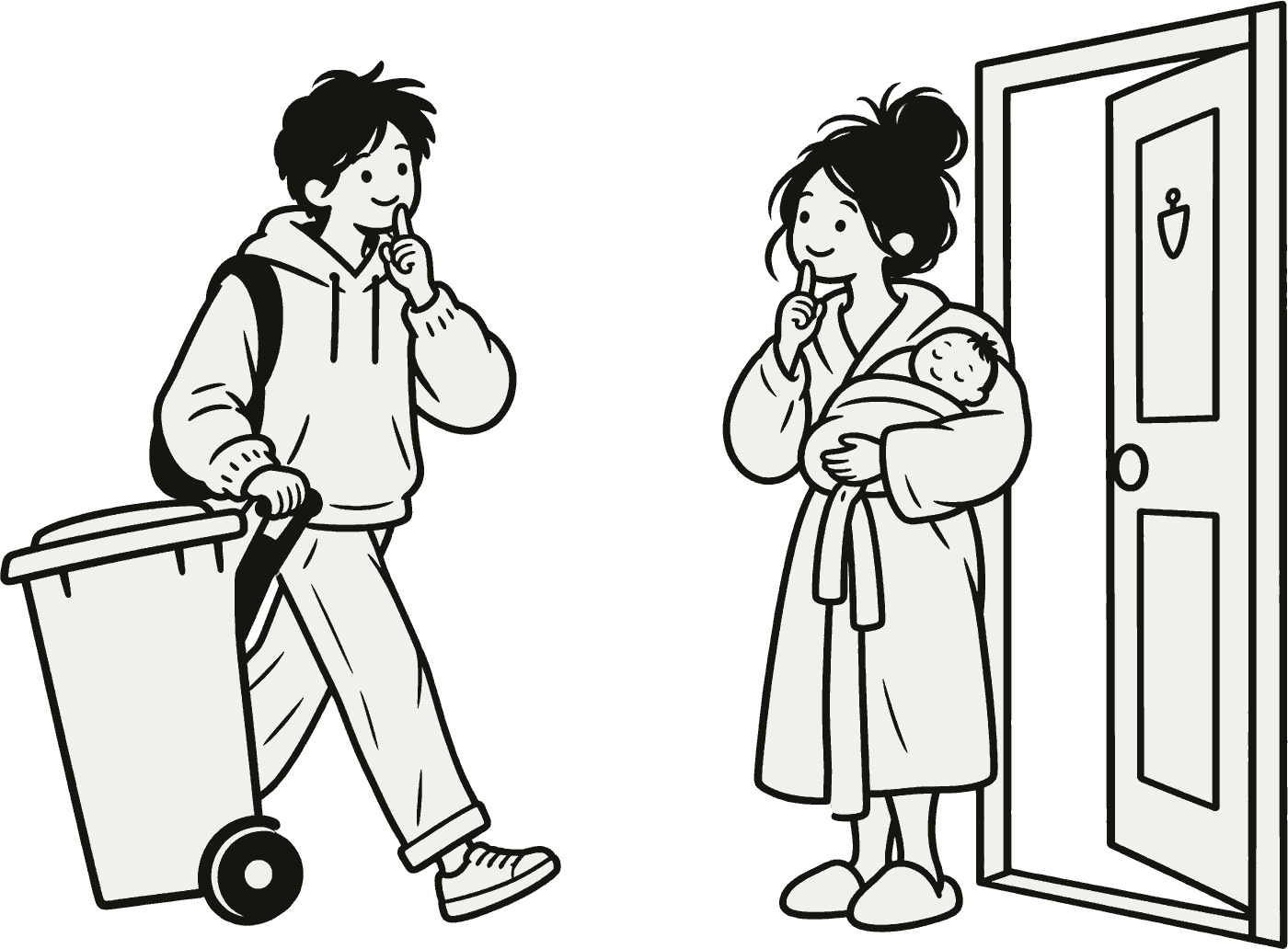
When The offer is “I’m taking your bins out”
- I’ll wheel them back in the next morning too. Full service.
- Leave the side gate unlocked and go back to bed.
When The offer is “I’m walking the dog”
- Hand over the lead and put your feet up.
- I’ll bring back a very tired dog, which is the good kind of tired.
When The offer is “I’m doing a shop for milk, bread and nappies”
- Send me the nappy size and anything else you’re out of.
- Add one treat you’d never buy for yourself. I won’t tell.
When The offer is “I’d love to do a slow pram walk with you”
- I’ll bring the coffees. Dressing gown optional.
- If it’s a bad day, say so and we’ll try another.
If it’s just congratulations for now, keep it short and about them. Leave out unsolicited advice, questions about sleep and anything that starts “when mine was that age…”.
How to actually help a friend with a newborn
Offer a job rather than a visit: take the bins out, drop off dinner, walk the dog or hold the baby while they shower. If you do visit, go when they suggest, bring food and keep it short.
Newborn visiting etiquette
Australian health advice covers the basics. Raising Children Network tells parents they can say no to visitors who are unwell, and that they might ask people “to come in pairs or to wait a few days before visiting”. Pregnancy, Birth and Baby says adults who spend time with babies should get the whooping cough vaccine.
The rest is our own rule of thumb: a visit should leave them with more energy than it took. Arrive with dinner, leave with the rubbish.
Do
- Ask first, and let them choose the day and time.
- Get your whooping cough vaccine if you’ll be near the baby.
- Bring food that can be eaten with one hand.
- Do one job while you’re there: dishes, washing or bins.
- Leave within the hour, before anyone has to hint.
Don’t
- Visit with a cold, a cough or anything else going round.
- Turn up unannounced, however close you are.
- Expect a cup of tea, a tidy house or a host.
- Ask “are they sleeping through?”
- Wake the baby. Ever.
That sleep question is harder than it sounds. Waking for night feeds is still normal at three to six months, and many babies still wake at six to twelve months. The honest answer is often “no”, and nobody wants to say that to a smiling visitor holding flowers.
What to bring a friend who just had a baby
Food first, then small things that make the day easier.
- A meal in a container you never want back. Returning a container is a job, and they have enough jobs.
- One-handed snacks. Muesli bars, cut fruit, anything that can be eaten with a baby in the other arm.
- Something just for them. The baby already has a drawer full of tiny socks. The grown-ups would love a proper coffee.
How to maintain friendships after having a baby (on four hours’ sleep)
Shrink the job to fit your life. Pick three to five people, keep contact tiny and invite friends into things you’re already doing, like the pram walk or the park. You don’t owe anyone a newsletter.
- Pick three to five people. The friends you’d want around in five years. Everyone else will keep for a while.
- Text with one thumb. The other one is busy. A photo and one line is a perfectly good catch-up.
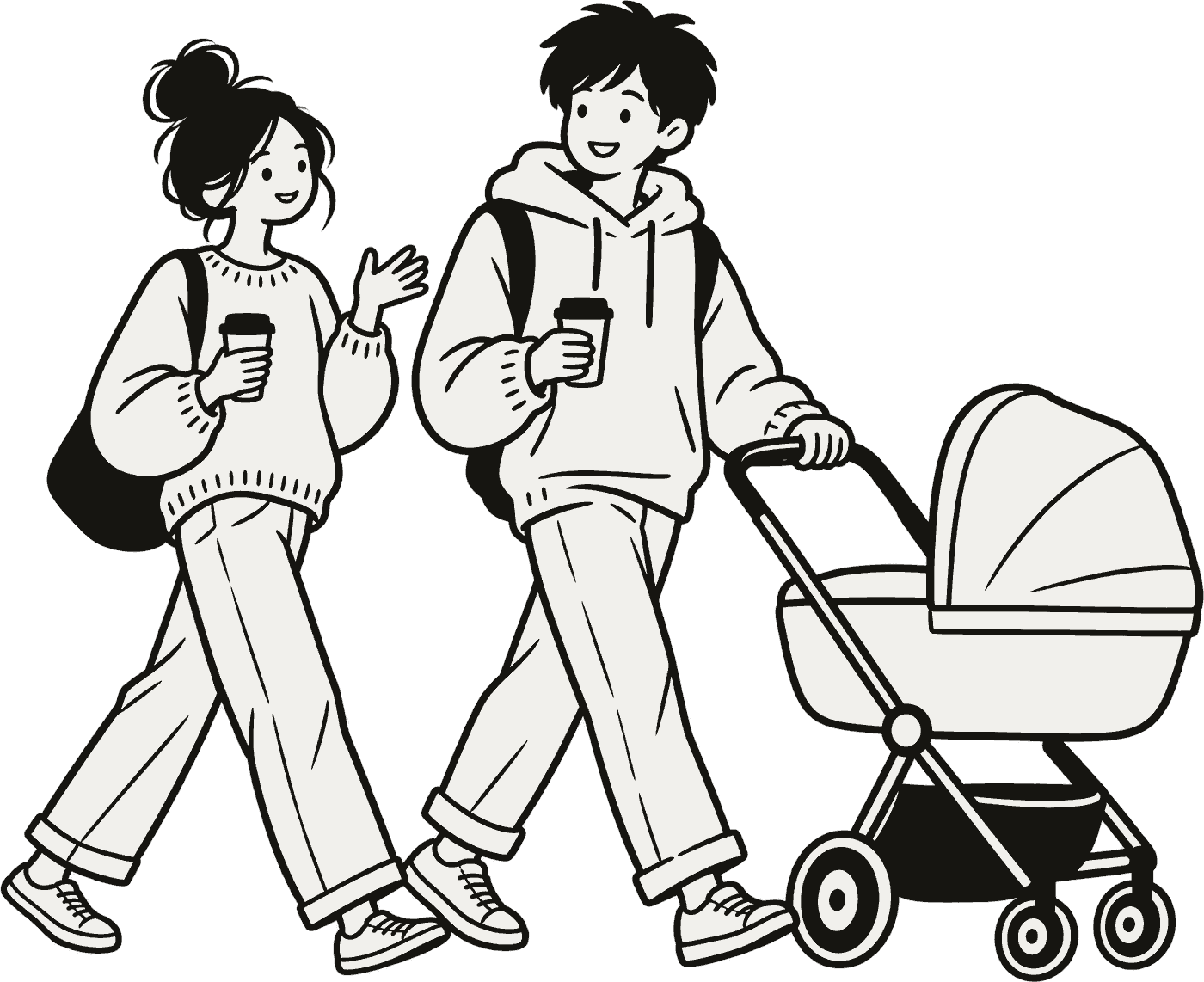
- Bring them along. A pram walk, a coffee at the park or takeaway at yours after bedtime. Friends may not know what’s welcome, so tell them.
- Say yes to specific offers. Asking feels bigger than it is. In 2022 US research with more than 2,000 adults, people who needed help “consistently underestimated others’ willingness to help” and overestimated how inconvenienced helpers would feel.
So when a friend offers to take the bins out, let them. It’s the entry-level job in the 4kg dictator’s household, and they’ve already applied.
If you need the words, here are three you can send with one thumb.
- Alive, besotted and very tired. I miss you. Tell me one thing from your world that has nothing to do with burping.
- Haven’t forgotten you, just forgotten what day it is. Slow walk on Sunday morning?
- Would love a visit next week. Heads up: the house is a mess and so am I.
Once you’ve had a few nights’ sleep, start with our guide on what to text a friend you haven’t talked to in a while. When replies are flowing again, our guide on how to stay in touch with friends helps you keep them going.
If you feel you have no friends since having a baby
You’re far from the only one. In a 2017 poll of 2,087 UK parents for Action for Children, more than half had experienced a problem with loneliness. A separate, self-selected Mumsnet survey in the same report found parents with a child under one were more likely to.
As the Swiss study found, parents’ contact with neighbours tends to grow, so new friends may be closer than you think. In Victoria, your Maternal and Child Health nurse can link you with first-time parent groups, and other states run their own child and family health services. When UK mums under 30 were asked what would help, “meeting other young mums” was by far the most popular answer.
If the loneliness comes with low mood or worry that won’t lift, talk to your GP or, in Australia, call PANDA on 1300 726 306. Pregnancy, Birth and Baby’s maternal child health nurses are on 1800 882 436, 7am to midnight (AET), seven days a week.
When all your friends are having babies and you’re not
Feeling left behind when friends start having babies is normal, whether you’re child-free by choice, single or hoping for a baby of your own. Tell them you miss them, ask to be part of ordinary plans and look after yourself too.
The strain runs both ways. In a 2024 Pew Research Center survey, 39% of US adults under 50 who don’t expect to have kids (among those it applied to) said not having them had made it harder to keep up with friends who have children, and 40% said it had made no difference.
- Say you miss them. Your friend may assume you’d find baby life boring, so tell them you don’t.
- Ask to join in. A pram walk, bath time or dinner at theirs after bedtime.
- Keep something that’s just yours. The café you always go to or a conversation that has nothing to do with sleep.
- Take space if you need it. You can be glad for someone and still step back for a while.
If you’re trying for a baby, or grieving one, a friend’s news can hurt even while you’re happy for them. You’re not alone in that: the World Health Organization estimates about 1 in 6 people experience infertility at some point. It’s okay to send warm congratulations and keep a little distance.
After a miscarriage, stillbirth or the death of a baby, Red Nose Grief and Loss offers support on 1300 308 307, 24 hours a day, and it’s open to friends as well as parents.
If you’re the new parent in this picture, one line goes a long way: “I miss you, and I want to hear about your life.”
The short version
- It’s normal. Contact with friends usually dips after a baby, and mothers’ contact tends to recover as the children grow.
- It’s rarely personal. Money and tiredness topped the reasons young mums gave for going out less.
- Friends: make one specific offer, keep visits short and keep in touch after the first few weeks.
- New parents: pick three to five people, text with one thumb and say yes to help.
- Feeling left out: say you miss them, and look after yourself as well.
The 4kg dictator won’t rule forever. They’ll learn to sleep, then to talk, then to insist on pressing every lift button themselves, and your friend will come up for air.
Until then, take the bins out: it says “I’m still here” better than any card. And if you’re the one in the dressing gown, a one-thumb “thank you” says it right back.
Questions people ask
Is it normal to lose friends after having a baby?
Yes. Long-term research finds contact with friends usually drops after a baby, and for mothers it tends to recover as the children grow. In a UK survey of mums under 30, money and tiredness were the top reasons they gave for going out less.
My friend had a baby and stopped talking to me. What happened?
Most likely nothing to do with you. Newborns can wake every one to three hours, and many new parents find it hard to ask for help. Keep sending short, kind messages with one specific offer, and don’t read slow replies as a verdict.
What should I text a friend who just had a baby?
Congratulate them, say something kind about them (not just the baby) and make one specific offer, such as dropping dinner on their doorstep on Thursday. Make it clear they don’t need to tidy up, host you or write a long reply.
Do friendships change after a baby?
Usually, at least for a while. Long-term research finds parents have less contact with friends and more with neighbours after a baby, and mothers’ contact with friends recovers as the children grow. In the early months, expect catch-ups to be shorter and more practical.
How do you maintain friendships with a newborn?
Keep contact small and regular: pick three to five friends, reply with short texts, invite people into things you’re already doing (like a pram walk) and say yes when someone makes a specific offer of help.
How do I stay friends when all my friends are having babies?
Tell them you miss them, keep something that is just yours and ask to join in with ordinary plans, like a walk or dinner at their place. It is also fine to step back for a while if baby news is hard for you right now.
Sources
- The timing of parenthood and its effect on social contact and support. Demographic Research, 2017.
- Romance and reproduction are socially costly. Evolutionary Behavioral Sciences (University of Oxford repository), 2015.
- Romance and reproduction are socially costly (full text). Evolutionary Behavioral Sciences (author’s copy), 2015.
- Shocking extent of loneliness faced by young mothers revealed. Co-op, with the British Red Cross, 2018.
- Sleep after having a baby. Pregnancy, Birth and Baby (Healthdirect Australia), 2024.
- Baby sleep patterns by age. Pregnancy, Birth and Baby (Healthdirect Australia), 2025.
- Social support during the postpartum period: mothers’ views on needs, expectations, and mobilization of support. Maternal and Child Health Journal, 2013.
- New mums: tips for the first 6 weeks. Raising Children Network, 2025.
- How common are mental health issues in the perinatal period?. Perinatal Anxiety & Depression Australia (PANDA).
- Contact PANDA. Perinatal Anxiety & Depression Australia (PANDA).
- Lifeline Australia. Lifeline.
- Whooping cough in babies and children. Pregnancy, Birth and Baby (Healthdirect Australia), 2025.
- Surprisingly happy to have helped: underestimating prosociality creates a misplaced barrier to asking for help. Psychological Science, 2022.
- It starts with hello: a report looking into the impact of loneliness in children, young people and families. Action for Children, 2017.
- Maternal and child health services. Better Health Channel, Victorian Government, 2026.
- Perceived pros and cons of not having children. Pew Research Center, 2024.
- 1 in 6 people globally affected by infertility: WHO. World Health Organization, 2023.
- Grief and loss support. Red Nose Grief and Loss.

Written by Sammy Sergi, who makes Howdy Mate!, a free iPhone app for keeping in touch with the people who matter. Every guide is checked against the research it cites.